Maths
The Ferndown Upper School Mathematics Department is one of the best (if not the best) in Dorset. We are extremely proud of the quality of lessons and learning that takes place, and our excellent results year after year. At Ferndown Upper School, we follow the GCSE Edexcel specification.
The mathematics department at Ferndown aims to equip students with deep conceptual understanding and the mathematical tools required to solve problems confidently, reason mathematically, and apply these skills across the curriculum and in real-life contexts. Our intention is that mathematics is never a barrier to students’ future success, whether in terms of qualifications, confidence, or essential life skills.
We are passionate and committed, as a team, to help our students to achieve their full potential at Ferndown Upper School.
Meet the Maths Department
Miss. R. Elliott
Head of Faculty
Maths

Mr. A.
Haymonds
Assistant Head of Maths

Mr. K. Martinez
Maths Teacher
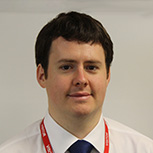
Mr. P.
Stevenson
Maths Teacher

Mr. M.
Phillips
Maths Teacher
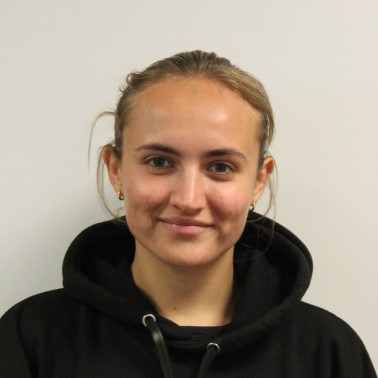
Miss. A.
Hine
Maths Teacher
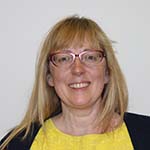
Miss. J. Pearson
KS3 Co-Ordinator
Mr. D.
Hepplewhite
Maths Teacher
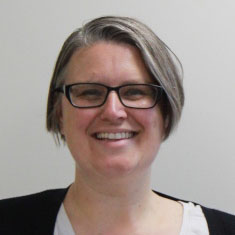
Miss. R.
Dunstone
Maths Teacher
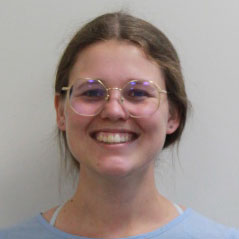
Miss. B.
Hunt
Maths Teacher
Miss. R. Elliott
Head of Faculty
Maths
Mr. A.
Haymonds
Assistant Head of Maths
Mr. K. Martinez
Maths Teacher
Mr. P.
Stevenson
Maths Teacher
Mr. M.
Phillips
Maths Teacher
Miss. A.
Hine
Maths Teacher
Miss. J. Pearson
KS3 Co-Ordinator
Mr. D.
Hepplewhite
Maths Teacher
Miss. R.
Dunstone
Maths Teacher
Miss. B.
Hunt
Maths Teacher
Curriculum Overview
Please rotate your device to landscape to view the Curriculum for years 9, 10 and 11.
Autumn 1
Autumn 2
Spring 1
Spring 2
Summer 1
Summer 2
Year 9
Year 10
Year 11
Angles.
Circle Theorems.
Fractions.
Negatives.
Four operations.
Area and perimeter.
Whole numbers and place value.
Money.
Decimals.
Approximation, estimation and error.
Pythagoras’ Theorem.
BIDMAS.
Substitution.
Expanding and factorising.
Percentages.
Linear equations.
Functions.
Algebraic expressions.
Circles.
Types of number.
Sequences.
2D shape.
Probability.
Simultaneous equations.
Indices.
Standard Form.
Surds.
Transformations.
Ratio.
Quadratic equations.
Curved graphs.
Trigonometry.
Quadratic formula.
Collecting and using data.
Coordinates.
Straight line graphs.
Constructions and loci.
Completing the square.
Iteration.
Statistical measures.
Proportion.
Non-linear simultaneous equations.
Non-right-angled trigonometry.
Graphs of trigonometric functions.
Time.
Measurement.
Volume.
Inequalities.
Units.
Vectors.
3D Shapes
Similarity and congruence
Distance and velocity time graphs
Transforming graphs.
Proof.
Revision
Revision
Topics shown in italics are higher paper only.
Extra-Curricular Opportunities & Enrichment
In Spring, Ferndown Upper School hosts the Dorset Royal Institute Mathematics Masterclasses for Year 9 students from FUS and other local schools. These Masterclasses are extracurricular workshops in mathematics, nurturing students’ curiosity and inspiring them to continue mathematics into the future. These sessions involve a speaker presenting an area of mathematics to students that is beyond, but often links to, the curriculum. They aim to stretch students’ understanding of mathematical concepts while fostering their enthusiasm for mathematics with the hope to encourage further study of the subject.
Careers Links
A GCSE in mathematics opens doors to a wide range of career opportunities and develops skills that are highly valued by employers, including problem-solving, logical reasoning, resilience, and the ability to analyse and interpret data. Mathematics supports clear thinking and decision-making, making it an excellent foundation for a wide range of careers such as engineering, finance, computing, science, economics, teaching and the public sector. Careers such as data analyst, actuary, financial analyst, and software developer rely heavily on mathematics. Professions in healthcare, like medical research and pharmaceuticals, also demand mathematical expertise. Additionally, mathematics supports careers in fields like logistics, cybersecurity, and scientific research, where problem-solving and analytical skills are essential. A solid foundation in GCSE mathematics is key to countless exciting and rewarding career paths.
Useful Information for Parents
Equipment Requirements
Years 9, 10 and 11
All students need to have a protractor, a pair of compasses, a ruler, pencils, black pens, and a scientific calculator (any of Casio FX‑83GTCW+, Casio FX‑85GTCW, Casio FX‑85GTX).
Years 12 and 13
A Level mathematics and further mathematics students will need black pens, a lever arch folder, lined paper, and a calculator (any of Casio FX‑991CW, Casio FX‑991EX).
Core mathematics students will need black pens, a lever arch folder, lined paper and a calculator (which can be the same one used at GCSE; any of Casio FX‑83GTCW+, Casio FX‑85GTCW, Casio FX‑85GTX).
